Source Biodegradable Compostable Trash Bag for Garbage, Shopping, and Household Use
Find 30 biodegradable compostable trash bag options tailored for garbage disposal, shopping, and household needs. Compare features like biodegradability, capacity, and customization to select the right solution for your sourcing requirements; compare the available evidence and request quotations based on your requirements.
Key considerations
Products List


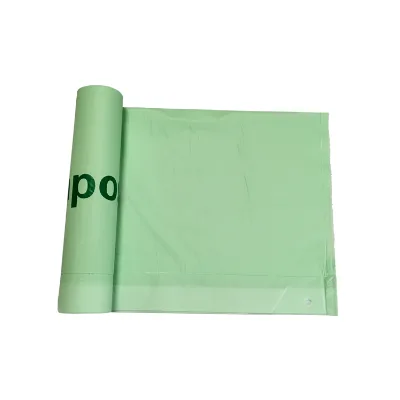


Comprehensive Sourcing Guide
Biodegradable Compostable Trash Bag Sourcing Guide
Buyers must first distinguish between general biodegradable claims and specific compostability certifications, as the observed product data highlights a mix of attributes including "Biodegradable," "Compostable," and "Plant Based" features. While some listings explicitly state "Yes" for biodegradability, others rely on broader terms like "Natural" or "Toxin Free," requiring verification that the material will actually break down in industrial composting facilities rather than just degrading into microplastics.
Procurement teams should also scrutinize the specific usage contexts listed, such as "Garbage," "Household," "Food," and "Shopping," to ensure the bag's structural integrity matches the intended waste stream. The presence of "Heavy Duty" and "Weight Limit" specifications like 5-10 kg suggests that not all biodegradable options are suitable for heavy commercial waste, necessitating a careful match between the bag's physical properties and the operational demands of the facility.
Product Scope and Observed Listing Signals
The market for these bags presents a wide variance in physical dimensions, with observed standards ranging from compact 22.5cm50cm sizes to larger 65cm70cm formats, alongside custom sizing options. Buyers should note that while some products are defined by fixed models like "TCLJ" or "TC1," others offer "Customized" dimensions, indicating that suppliers can tailor the footprint to specific bin requirements or retail packaging needs.
Color and handle configurations also vary significantly, with listings showing "Multicolor," "Blue," and "Unicolor" options, as well as "Shoulder Length Handle" and "Flat" handle styles. This diversity allows for branding opportunities through "With Logo Printing" and "Laminating" processes, but it also requires buyers to clearly define their aesthetic and functional requirements to avoid receiving products that do not align with their brand identity or ergonomic standards.
Technical Specifications to Verify
Verification of the plastic type is critical, as the data indicates the use of "PET" in some listings alongside plant-based biodegradable materials, creating a potential confusion between traditional recyclable plastics and true compostable polymers. Buyers must confirm that the "Biodegradable" and "Compostable" claims are backed by the specific resin composition, ensuring the product does not contain non-degradable additives that would compromise the environmental promise of the purchase.
Capacity and weight limits are equally important technical parameters, with observed ranges spanning from 1L to 65L and specific weight limits noted as 5-10 kg for certain models. Since some products are described as "Medium Soft" and "Opaque," while others are "Heavy Duty," procurement teams must validate that the hardness and transparency levels meet the specific handling requirements of their waste management workflow to prevent tearing or leakage during use.
Compliance and Safety Documentation
While the provided data mentions "Toxin Free" and "Scent Free" attributes, buyers must request independent laboratory test reports to substantiate these safety claims, particularly for bags intended for "Food" or "Household" applications. The absence of specific certification numbers in the general listing data means that relying solely on supplier descriptions is insufficient; documented proof of non-toxicity is essential to ensure the bags do not leach harmful substances into the compost or soil.
Buyers should also verify the specific compostability standards applicable to their region, as the background knowledge references ASTM D6400 and EN13432, though these are not explicitly confirmed in the product facts. It is the buyer's responsibility to ensure that the supplier can provide valid certificates proving the product meets the relevant local or international standards for industrial composting, rather than assuming compliance based on general marketing terms like "Recyclable" or "Natural."
Cost Drivers and Commercial Terms
The observed price range of 0.01 to 7500 USD and MOQs varying from 1 to 100,000 units indicate that cost is heavily influenced by order volume and customization levels. Buyers should anticipate that "Customized" models with specific logos, colors, or dimensions will carry a higher unit cost and potentially higher minimum order quantities compared to standard "Unicolor" or generic "Box" packed items.
Packing methods also impact logistics costs, with listings showing options for "Box," "Carton Case," and "Carton" packaging, which affects how efficiently the product can be shipped and stored. Additionally, the "MOQ: 500kg" observation for certain items suggests that some suppliers may price based on weight rather than unit count, requiring buyers to calculate the total landed cost carefully to avoid unexpected expenses related to shipping weight or volume constraints.
Supplier Qualification and Quality Control
Given that the observed product origins include "Henan" and "China Qingdao," buyers should prioritize suppliers with established manufacturing footprints in these regions who can demonstrate consistent quality control processes. The variation in product models and features suggests a fragmented supply chain, making it vital to audit the supplier's ability to maintain consistency across different batches, especially when dealing with "Customized" orders that require precise adherence to design specifications.
Quality control should extend to the "Printing Process" and "Sealing" methods, as the data notes "Heat Seal" and "Laminating" techniques. Buyers must verify that the sealing integrity is robust enough to prevent leaks, particularly for bags used with "Garbage" or "Food" waste, and ensure that the printing process does not compromise the biodegradability of the material or introduce contaminants that could hinder the composting process.
Long-Term Procurement Checks
Sourcing these bags requires a strategy for monitoring the long-term performance of the product in real-world composting environments, as "Biodegradable" claims can degrade differently under varying temperature and humidity conditions. Buyers should establish a feedback loop with their waste management partners to track whether the bags are successfully breaking down as expected, ensuring that the "Compostable" label translates to actual environmental benefits over time.
Regular re-evaluation of supplier performance is also necessary to ensure that the "Customization" and "Feature" sets remain consistent with evolving sustainability goals. As the market for "Plant Based" and "Natural" materials evolves, procurement teams must stay informed about new material technologies and standards to ensure their supply chain remains competitive and compliant with future regulatory requirements regarding waste reduction and circular economy principles.
FAQs
What sizes are available for biodegradable compostable trash bags?
Standard sizes include 65cm by 70cm, 38cm by 40cm, and 45cm by 50cm. Custom dimensions are also available to meet specific waste management needs. These models support various household and commercial applications, ensuring proper fit for different bin capacities and usage scenarios.
Can these bags be customized with a logo?
Yes, logo printing is available using laminating processes. Buyers can request customized designs to enhance brand visibility. This feature supports promotional use and corporate identity, allowing businesses to distribute branded waste solutions while maintaining the functional integrity of the biodegradable material.
What is the minimum order quantity for these products?
The minimum order quantity starts at 500kg for certain models. Other items may have different MOQs ranging up to 100,000 units. Buyers should verify specific requirements based on the selected product model and packaging type, such as box or carton case configurations.
Are these bags suitable for heavy-duty household use?
Yes, they are designed for heavy-duty applications with weight limits of 5-10 kg. The medium soft hardness and opaque transparency provide durability for garbage and household waste. They are also suitable for home appliances and grocery shopping, ensuring reliable performance during daily use.
Where are these biodegradable bags manufactured?
Production originates from China, with specific manufacturing hubs in Henan and Qingdao. These locations support the supply chain for various models, including those with shoulder length handles or flat handles. Buyers can source directly from these regions to ensure consistent quality and availability.
What features make these bags environmentally friendly?
These bags are biodegradable, compostable, and toxin-free. They are plant-based and natural, offering a sustainable alternative to conventional plastics. The recyclable and disposable nature supports waste reduction goals, making them ideal for eco-conscious households and businesses seeking responsible waste management solutions.